
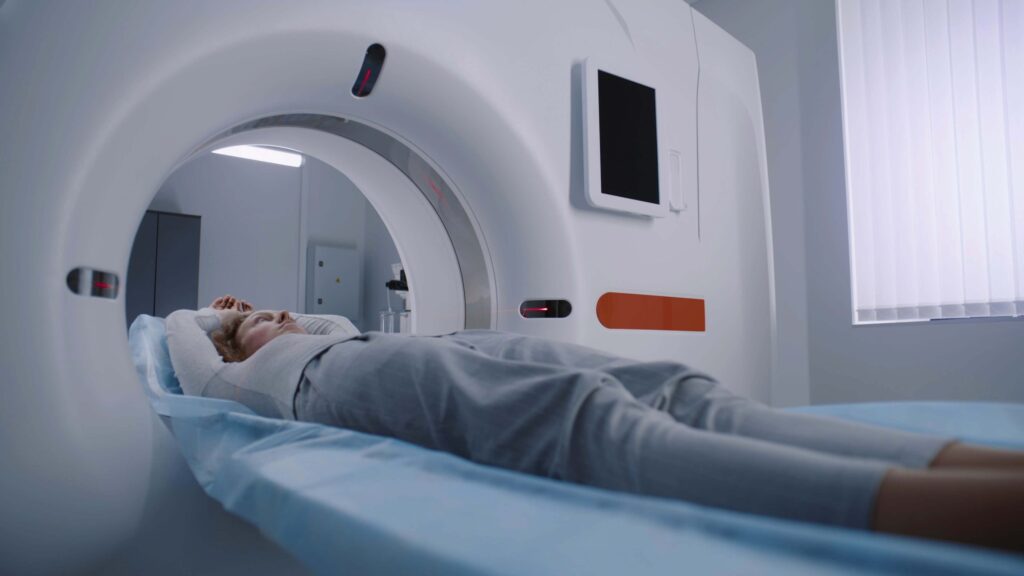
Is Diagnostic Imaging Safe? What You Should Know About X-Rays, MRIs, and More
If your doctor has recommended an imaging exam, you might be wondering: Is it safe?
At Imaging Healthcare Specialists (IHS), we understand that patients often have questions about radiation, MRIs, and other types of imaging. The good news is that today’s diagnostic imaging technology is highly advanced, carefully regulated, and designed with your safety in mind.
Let’s walk through what imaging is, how it works, and why you can feel confident about your care.
What Is Diagnostic Imaging?
Diagnostic imaging allows doctors to see inside the body without surgery. These images help detect injuries, diagnose medical conditions, monitor progress, and guide treatment decisions.
Common imaging exams include: X-rays, MRI, CT scans, PET/CT, Nuclear medicine exams (such as PET/CT), Ultrasound, and Fluoroscopies
The type of exam your doctor recommends depends on your symptoms and the area of the body being evaluated. Each imaging method serves a specific purpose and provides unique information.
Understanding Radiation: Is It Dangerous?
Radiation exposure does carry a very small theoretical risk over a lifetime. However, the amount used in medical imaging is carefully controlled and monitored.
At IHS, safety is always our top priority. We follow the ALARA principle – “As Low As Reasonably Achievable.” This means we use the lowest radiation dose possible while still obtaining high-quality images your doctor can rely on.
Modern CT technology has advanced significantly and can reduce radiation exposure by 50–90% compared to older systems – without sacrificing image clarity.
What About Nuclear Medicine?
Nuclear medicine exams use a small amount of radioactive material that is injected, swallowed, or inhaled. This allows physicians to see how organs are functioning, not just what they look like.
These exams are considered safe, minimally invasive, and extremely valuable for detecting certain conditions early.
MRI: A Radiation-Free Option
Magnetic Resonance Imaging (MRI) uses powerful magnets to create highly detailed images of soft tissues, joints, organs, and blood vessels. MRI is commonly used to evaluate:
· Ligaments and joints
· Brain and spine conditions
· Heart and vascular disease
· Certain cancers
· Follow-up imaging when repeated exams are needed
Because MRI uses a strong magnetic field, patients are carefully screened beforehand to ensure safety, especially if they have implanted medical devices or metal in the body. At IHS, we offer advanced MRI systems designed with patient comfort in mind, including wider-bore machines to reduce feelings of claustrophobia.
Ultrasound: Safe and Widely Used
Ultrasound uses high-frequency sound waves to produce real-time images. It is one of the safest imaging tools available and is commonly used for:
· Pregnancy care
· Abdominal exams
· Vascular studies
Ultrasound is painless, non-invasive, and often performed in a short amount of time.
How Modern Technology Improves Safety
Imaging technology continues to evolve, making exams safer, faster, and more comfortable than ever before. At Imaging Healthcare Specialists, we invest in:
· Low-dose CT protocols to minimize radiation exposure
· Advanced MRI systems designed for patient comfort
· Non-invasive imaging options whenever appropriate
· High-resolution technology that improves diagnostic accuracy
Our board-certified radiologists and experienced technologists are specially trained to ensure your exam is performed safely and accurately.
Your Safety Is Our Priority
Overall, diagnostic imaging is considered very safe. When radiation is used, the amount is carefully measured and minimized. Many imaging options, such as MRI and ultrasound, do not use radiation at all.
At Imaging Healthcare Specialists, we are committed to providing high-quality imaging in a professional, compassionate environment. Our team is here to answer your questions and help you feel informed and comfortable every step of the way.
Please note that not all imaging services are available at every IHS location. For details about specific services, visit our location pages.